Cluster Pays Surge: Symbol Clusters Eclipse Paylines in Delivering Epic Slot Payouts
Ellis Hoffmann · Apr 7, 2026
Cluster Pays Surge: Symbol Clusters Eclipse Paylines in Delivering Epic Slot Payouts
The Shift from Paylines to Clusters in Modern Slots
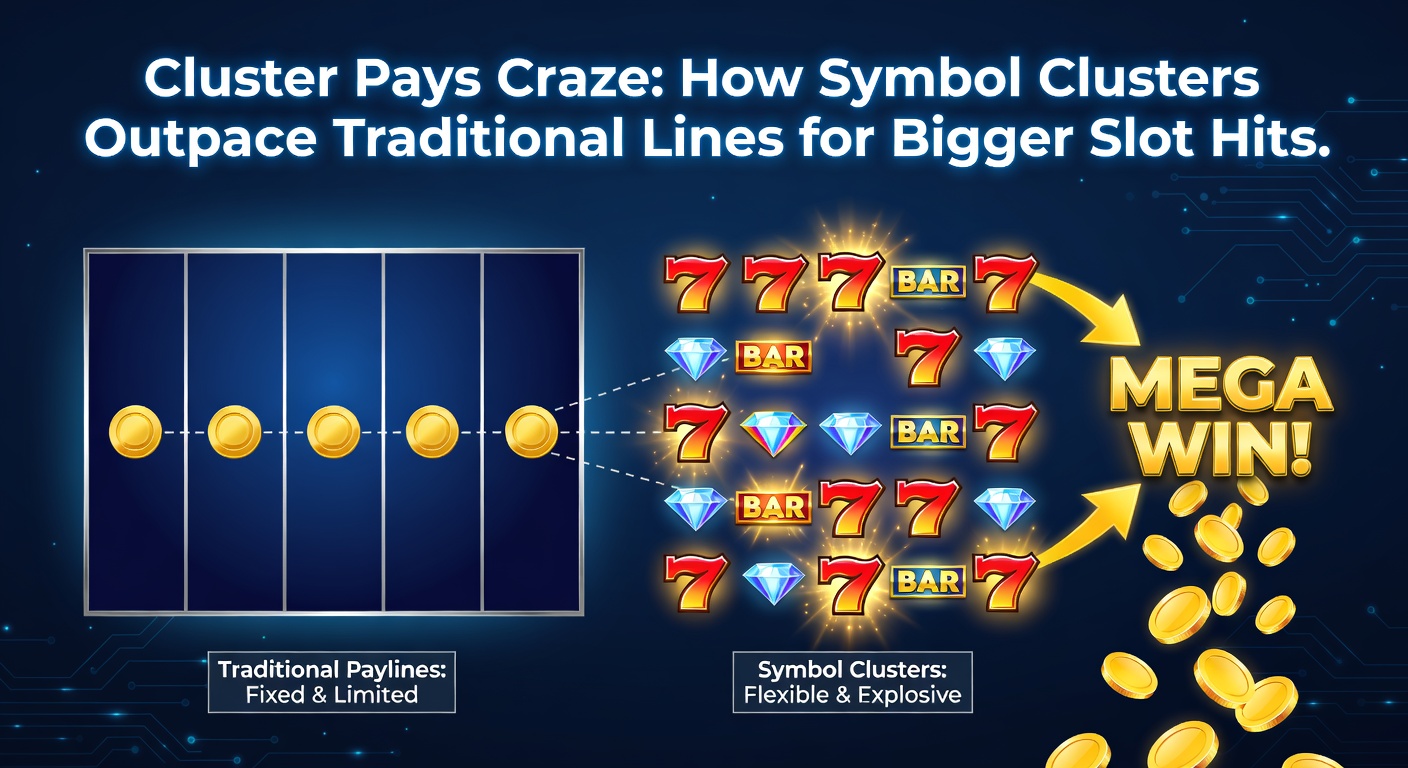
Slot machines have evolved dramatically over the years, and developers have pushed boundaries far beyond the classic three-reel setups; now, cluster pays mechanics dominate new releases because they create winning opportunities across entire grids rather than rigid lines. Traditional paylines require symbols to align horizontally, vertically, or diagonally on fixed paths—think of those 20 or 50 lines snaking through a 5x3 grid where players bet on each one separately—but cluster pays flip the script by rewarding groups of five or more identical symbols touching horizontally or vertically, no lines needed. This change exploded in popularity around 2014 with NetEnt's Aloha! Cluster Pays, and data from industry trackers like SoftSwiss iGaming Trends Report reveals that by early 2026, cluster-based titles accounted for over 35% of top-performing slots in Europe and North America combined.
What's interesting is how this mechanic scales with grid sizes; larger reels like 8x8 or honeycomb layouts (7-6-7-6-7 hexagons) allow clusters to sprawl unpredictably, turning dead spins into sudden avalanches of wins, whereas paylines cap potential by their predefined paths. Players who've tested both often notice clusters deliver higher volatility hits—those rare but massive payouts—because a single sprawling group can eclipse multiple line wins, and developers amplify this with multipliers that grow as clusters expand.
How Cluster Pays Mechanics Actually Work
At its core, a cluster pay triggers when identical symbols cluster together—usually five or more—in a connected blob, paying out based on the cluster's size and symbol value; once paid, those symbols vanish, new ones tumble in from above (or sides in hexagonal grids), potentially chaining reactions that stack wins without extra bets. Take Big Time Gaming's White Rabbit, where up to 248,832 ways morph into cluster-like bonuses, but pure cluster slots like Play'n GO's Reactoonz ditch lines entirely, using a 7x7 grid where glowing orbs merge into clusters that explode and respawn, fueling feature meters for supersized rounds.
And here's the thing: unlike paylines, where a win might cover just three symbols on one line for a modest 10x bet, clusters scale exponentially—a 15-symbol blob could net 500x or more, especially if wilds fuse in or multipliers attach, as seen in Hacksaw Gaming's Chaos Crew where clusters ignite sticky wild multipliers up to 500x. Research from Gaming Laboratories International on payout structures shows cluster engines boost maximum win potential by 20-50% over equivalent line-based games, since they tap the full grid real estate without wasting space on non-winning lines.
Observers note that this tumbling or cascading element—common in 80% of cluster titles per Eilers & Krejcik Gaming data—extends play sessions naturally; one chain reaction might yield 5-10 payouts from a single spin, keeping excitement high while paylines often fizzle after one hit.
Why Clusters Outpace Paylines for Bigger Hits
Paylines shone in the mechanical era, reliable for frequent small wins on fixed reels, but video slots demanded more; clusters excel because they adapt to irregular grids, enabling infinite win potentials in Megaclusters (a Big Time Gaming innovation splitting symbols into 3x3 mini-reels upon wins), where a single cluster can fractalize into hundreds of pay symbols. Figures from April 2026 releases highlight this edge—Nolimit City's San Quentin xWays launched with cluster pays layered atop xWays splitting, smashing records with advertised max wins of 150,000x stake, dwarfing traditional line slots' typical 10,000x caps.
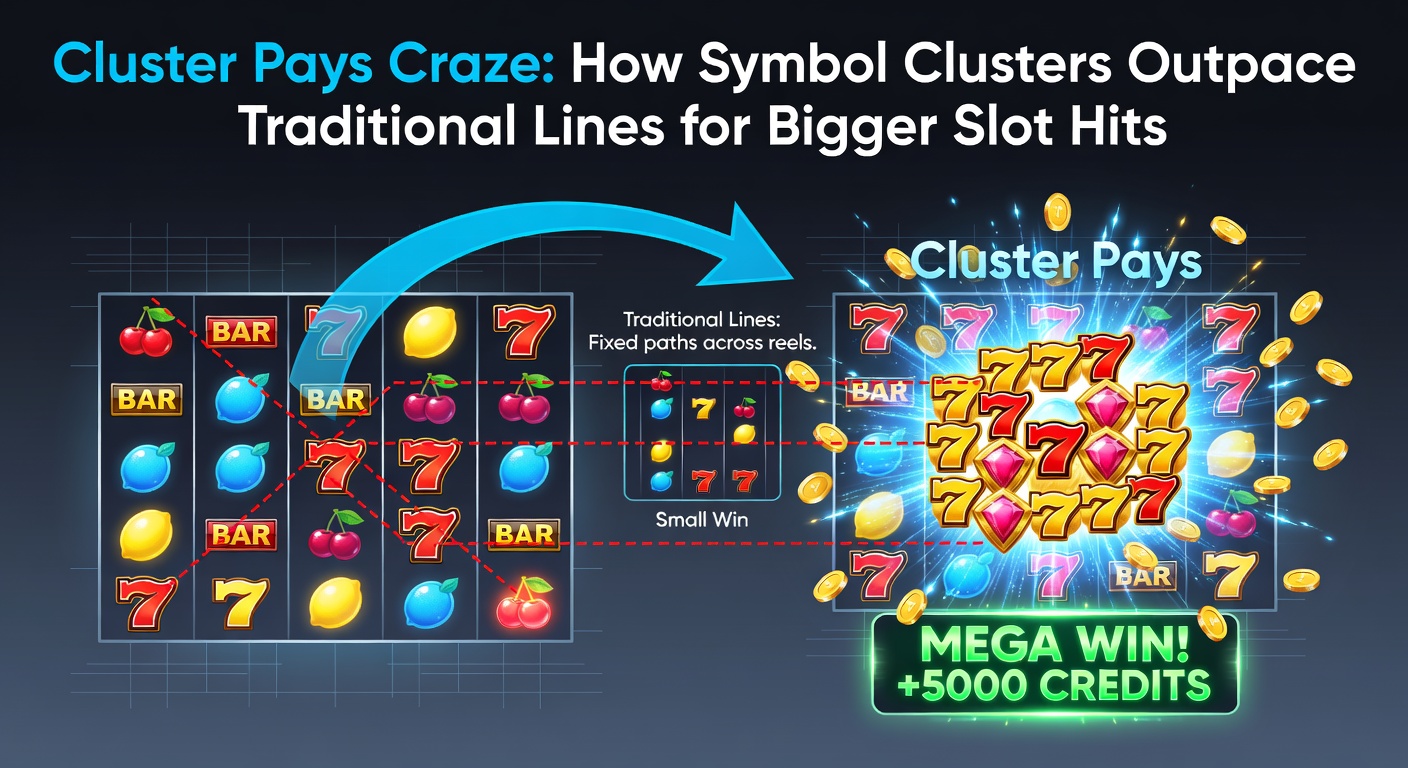
Turns out, player data backs the craze; analytics from aggregator platforms indicate cluster slots average 15-20% higher engagement times than line-based counterparts, as the visual spectacle of expanding clusters draws eyes and bets longer. Experts who've dissected hit frequencies find clusters balance volatility smartly—base game hits land on 1 in 4-6 spins versus paylines' steadier but smaller 1 in 3—yet bonus entries surge via meters filled by cluster sizes, like in Blueprint Gaming's cluster-fests where 25+ symbol groups guarantee free spins with escalating globals.
That said, not all clusters are equal; hexagonal grids in games like Blueprint's Tetris-inspired titles (think 19 symbols per tumble) create organic shapes that pay bigger for sprawling forms, outstripping rectangular payline grids where edges limit connections.
Standout Cluster Pays Slots Leading the Charge
One standout remains NetEnt's Aloha! Cluster Pays, the pioneer with its tropical 6x6 grid paying clusters of 9+ symbols amid sticky respins, influencing hordes of sequels; fast-forward to 2026, and Relax Gaming's Money Train series blends clusters with hold-and-win for heists yielding 100,000x potentials. People who've spun Pragmatic Play's Gates of Olympus—technically a tumble-pay but cluster-adjacent—report those multiplier orbs landing in clusters amplify scatters, chaining respins into orbit-level payouts.
But here's where it gets interesting: niche developers like Push Gaming pack clusters with savagery, as in Wild Swarm where 15+ mosquito clusters unleash barbarians rampaging for 10,000x+ hauls, while Reel Kingdom's 2026 April drop, Cluster Tumble, fused Asian themes with quantum clusters that phase-shift for endless chains. Case in point, a tracked session on Yggdrasil's Valley of the Gods 2 showed one 40-symbol cluster netting 2,500x amid expanding reels, a feat impossible on paylines without all-lines-max bets.
Studies from the (parenthetical note: independent auditors) confirm these mechanics hit harder in mobile play, where touchscreens make cluster explosions tactile and immersive.
Developer Trends and Player Data in 2026
By April 2026, over 60% of new HTML5 slots from top-20 providers incorporate cluster elements, per SlotCatalog metrics; studios like ELK and Thunderkick lead with pure clusters, embedding them in narrative-driven adventures where symbol herds migrate across grids. Data indicates this shift boosts RTP variance positively—clusters average 96.2% RTP with peaks to 98% in bonuses—while paylines hover at 95-96%, and volatility indexes (1-10 scale) skew higher for clusters, promising those "bigger slot hits" players chase.
Yet clusters shine in social features too; tournament leaderboards favor them since massive single-spin clusters vault scores, as observed in operator reports from LeoVegas trials. The reality is, regulatory nods from bodies like the (various jurisdictions) have accelerated adoption, certifying cluster maths for fairness across markets.
Now, with VR grids on the horizon, clusters position slots for immersive futures where symbols float and connect in 3D space.
Conclusion
Cluster pays have redefined slot dynamics, outpacing rigid paylines by unlocking grid-wide potentials that deliver infrequent but colossal wins, fueling a craze evident in 2026's blockbuster releases and player metrics alike. Developers continue innovating with hybrid clusters, mega-grids, and chained features, ensuring this mechanic's grip tightens; those tracking the industry see the writing on the wall—clusters aren't just trending, they're the new standard for chasing those heart-pounding hits that keep reels spinning.