Layered Reel Collisions: Free Spins and Jackpot Triggers in Modern Slot Designs
Morgan Krause · Aug 26, 2026
Layered Reel Collisions: Free Spins and Jackpot Triggers in Modern Slot Designs
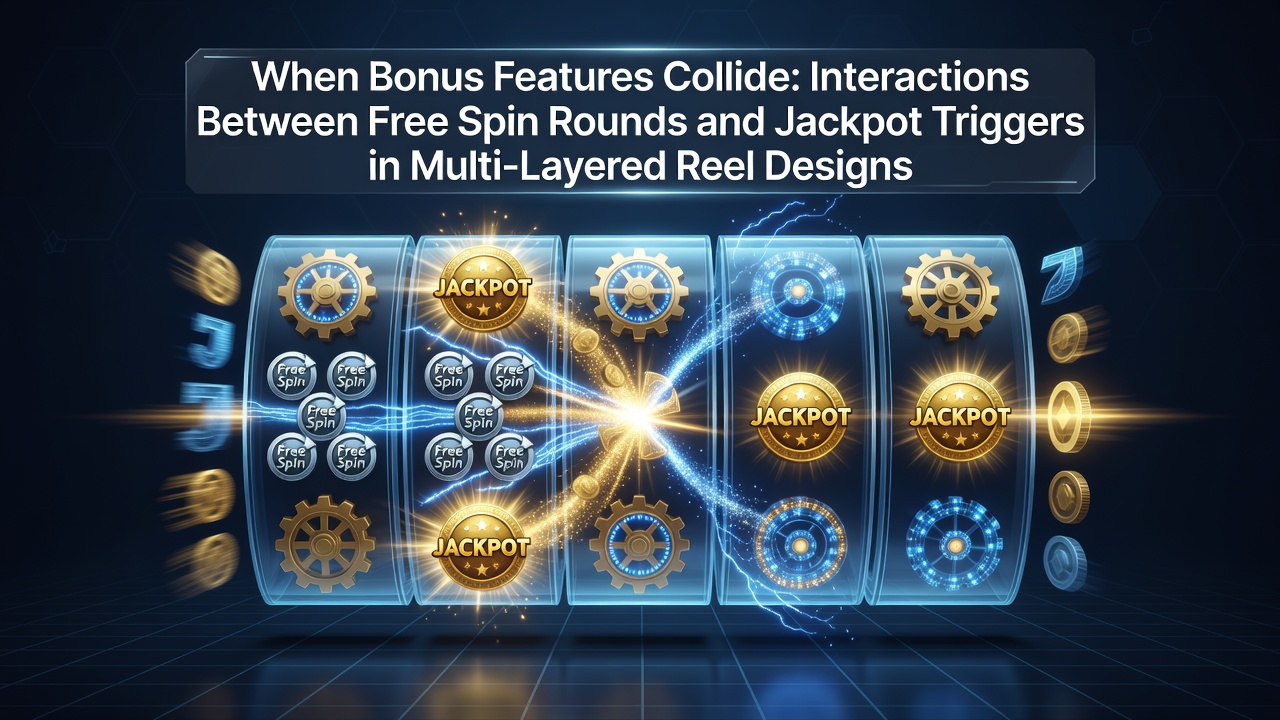
Multi-layered reel designs stack multiple reel sets or dimensional planes within a single spin sequence, and these structures create specific points where free spin rounds intersect with jackpot triggers. Developers program each layer to operate independently yet share trigger conditions, so a scatter symbol landing on the base layer can activate free spins while simultaneously advancing a jackpot meter on an overlay layer. Data from industry reports shows these overlaps alter payout distributions because the game must resolve both features in sequence or in parallel depending on the coding rules.
Mechanics of Multi-Layered Reels
Reel layers function as separate matrices that share the same symbol pool but apply distinct rules for wild substitutions and scatter counts. One layer might require three scatters for free spins while another layer counts the same symbols toward a progressive jackpot threshold. When symbols align across layers, the system evaluates each condition in a fixed order that prevents double-counting or missed triggers. Observers note that this ordering becomes critical during bonus entry because a single spin can satisfy multiple criteria at once.
Free Spin Round Activation Patterns
Free spin rounds typically launch when scatters reach a predetermined count on the primary layer, after which the game shifts to a dedicated reel configuration that may retain or discard the secondary layers. Some titles keep the layered structure active during free spins, allowing jackpot symbols to appear on the overlay while the player receives additional spins. Research indicates that retention of layers during free spins increases the mathematical volatility because the jackpot trigger remains live throughout the round.
Developers adjust reel weights so that jackpot symbols appear more frequently on certain layers during free spins, creating a controlled escalation path. This adjustment balances the expected value of the free spin round against the base game contribution to overall RTP. Figures from operator performance summaries reveal that games maintaining layered jackpot access during free spins show higher average bet sizes per session compared with titles that isolate the jackpot to the base game only.
Jackpot Trigger Integration Points
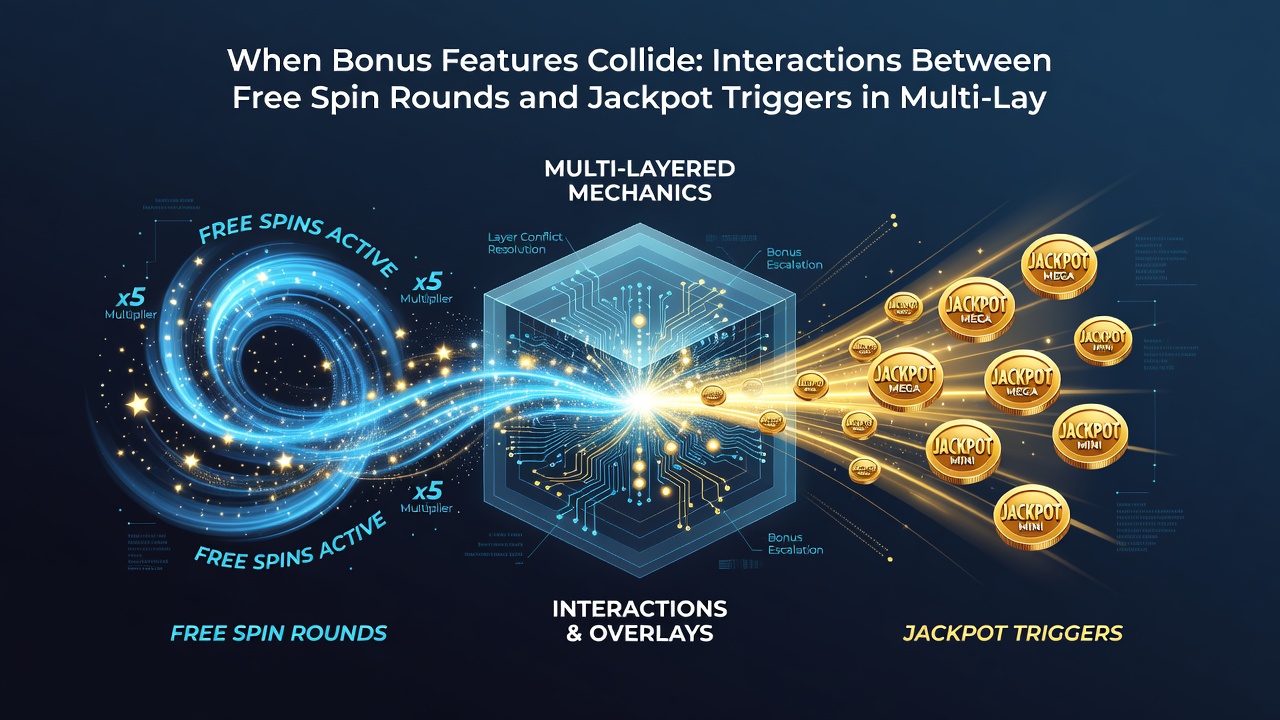
Jackpot triggers in these designs often rely on meter collection systems where symbols from any layer contribute to a shared counter. When the counter fills during a free spin sequence, the game awards the jackpot and may extend the free spins or transition to a dedicated jackpot reel set. The interaction becomes pronounced when a free spin round already contains enhanced symbol frequencies, because the meter fills faster and the probability of a jackpot award rises within the bonus window.
Observed Interaction Behaviors
Studies of multi-layered games document several recurring patterns. A free spin round can inherit partial meter progress from the triggering spin, so players enter the bonus with an existing jackpot chance already in motion. Conversely, some designs reset the meter upon free spin entry to maintain separate contribution pools for base and bonus play. In August 2026 performance data released by the Nevada Gaming Control Board, titles using inherited meter mechanics recorded elevated jackpot hit rates during free spin sequences compared with reset-based counterparts.
Another documented behavior occurs when a jackpot trigger lands on an overlay layer while free spins remain active on the base layer. The game pauses the spin count, resolves the jackpot, then resumes the remaining free spins with or without modified reel weights. This pause-and-resume sequence prevents simultaneous resolution conflicts and keeps the player sequence clear. Industry analyses from the University of Nevada, Las Vegas gaming research center show that clear sequencing correlates with fewer player disputes over missed awards.
Regulatory and Design Considerations
Regulatory frameworks in multiple jurisdictions require transparent disclosure of how layered features interact, especially when one bonus modifies the probability of another. Operators must submit detailed trigger probability tables that account for every possible overlap scenario. Compliance documentation often includes simulation results covering millions of spins to verify that advertised RTP values remain accurate when free spins and jackpots collide. Those simulations help regulators confirm that no unintended advantage or disadvantage arises from the layered interactions.
Design teams test these collisions extensively during certification because small changes in symbol weighting on one layer can shift the overall return profile. Testing protocols now incorporate combined free spin and jackpot scenarios as standard evaluation points rather than treating each feature in isolation. This approach reflects the reality that players experience the combined system rather than separate components.
Conclusion
Multi-layered reel designs produce measurable interactions between free spin rounds and jackpot triggers that affect both game mathematics and player experience. The ordering of feature resolution, meter inheritance rules, and layer retention during bonuses determine how often and under what conditions these collisions occur. Data from regulatory bodies and academic research centers continues to track these patterns as developers refine the underlying systems, providing operators and players with clearer information about expected outcomes in layered slot environments.